Why Are We Being Told to Prepare for Emergencies in 2026?
It’s not every day that the Government tells us to think about emergency supplies, power cuts, water outages and what we’d do if the phone network stopped working.
But that’s the direction of travel in 2026.
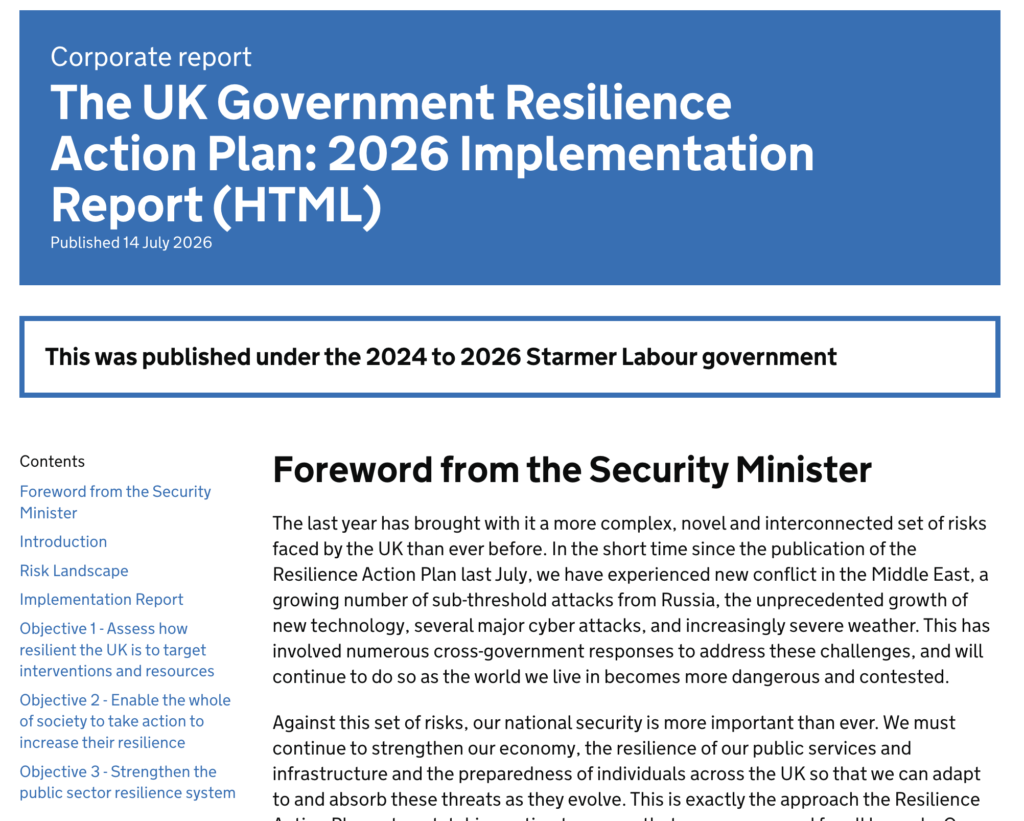
In July, the Government published its 2026 Resilience Action Plan implementation report, alongside an updated National Risk Register.
It’s also planning a wider public campaign intended to help us prepare for emergencies and temporary disruption.
That might all sound a bit dramatic.
But before anyone starts digging a bunker beneath the garden shed, it’s worth looking at what we’re actually being asked to do—and why understanding the basics of personal preparedness makes sense.
Is the Government Expecting a Major Disaster?
Not necessarily.
The National Risk Register isn’t a prediction of what’ll happen next. It’s a planning document covering events that could cause serious disruption if they occurred.
Those risks include flooding, extreme heat, drought, power cuts, interruptions to water supplies, pandemics, cyberattacks and failures affecting communications or other essential infrastructure.
It also considers hostile activity, terrorism and disruption to important supply chains.
That doesn’t mean all these things are about to happen, or that they’re equally likely.
The register exists so government departments, emergency services, councils, utility companies and other organisations can plan before something goes wrong.
The difference in 2026 is that more attention’s now being given to what we can do at home.
Why Are We Being Asked to Prepare?
The basic argument’s fairly straightforward.
Emergency services and utility companies will respond when something goes wrong, but they might not be able to help everyone immediately.
If thousands of homes lose power or water at the same time, the most urgent cases have to come first. That’ll often mean people in immediate danger, those with serious medical needs and anyone who can’t manage without additional support.
If we can safely manage the first few hours—or perhaps a couple of days—we’re less dependent on immediate outside assistance.
That doesn’t mean we’re being abandoned.
It means having enough supplies, information and backup options to cope while services are restored.
Our role isn’t to replace the emergency services or prepare for the end of civilisation. It’s simply to stop a manageable disruption from immediately becoming a household crisis.
Recent Events Show Why This Matters
We don’t need to imagine an unlikely national catastrophe to understand the value of being prepared.
Recent events have included water outages, hosepipe bans, evacuations caused by wildfires, record temperatures and disruption linked to conflict overseas.
Each has affected people differently, but they all demonstrate how quickly normal routines can be interrupted.
Water Outages in Kent and Sussex
Thousands of South East Water customers experienced serious supply problems during late 2025 and January 2026.
Some homes lost their water entirely. Others had low pressure or were told to boil water before drinking it.
The January incident continued for more than two weeks in some areas. Schools, businesses, care services and ordinary households all had to find ways of managing without a reliable tap supply.
Following repeated incidents, Ofwat opened an investigation into South East Water and its response to customers.
For anyone affected, the technical cause probably wasn’t their first concern.
They needed drinking water. Toilets still had to be managed. Food needed preparing, pets needed water and some people couldn’t easily reach a distribution point.
This wasn’t a theoretical emergency. It was a local infrastructure failure that made everyday life considerably harder.
Keeping some water at home wouldn’t have solved everything, but it would’ve made the first part of the outage easier to manage.
My three-day emergency water plan covers how much we might reasonably store and how to keep it safely.
I’ve also written about how I prepare for a possible water shortage, including the containers and treatment options I use.
Hosepipe Bans Are Another Warning Sign
Water pressure hasn’t only shown up through supply failures.
During July 2026, hosepipe bans were introduced across large parts of England and Wales. Restrictions affected customers of several suppliers, including Affinity Water, South East Water, Thames Water and Dŵr Cymru.
Water UK’s current hosepipe-ban information lists the companies and areas affected.
A hosepipe ban isn’t the same as losing water at home. We can usually continue using the tap for drinking, cooking and washing.
However, restrictions show that suppliers are having to manage demand more carefully after a prolonged spell of dry weather.
We don’t need to get bogged down in reservoir percentages or technical explanations. The useful takeaway is that reliable water supplies depend on more than simply turning on a tap.
It’s also important not to confuse preparation with panic buying.
There’s no benefit in clearing a supermarket shelf of bottled water whenever restrictions are announced. A better approach is to build a modest supply over time, store it properly and rotate it through normal use.
Extreme Heat Has Become Harder to Ignore
We’ve also experienced exceptional temperatures during 2026.
The Met Office confirmed a temperature of 35.1°C at Kew Gardens on 26 May, setting a new record for the month. June brought another intense heatwave, with temperatures reaching 37.7°C in Norfolk.
By the middle of July, the Met Office’s assessment of summer 2026 found that we’d already recorded more days above 30°C than during the whole summer of 1976.
Heat doesn’t always come to mind when we think about emergency preparedness, but it creates some very practical problems.
Many of our homes hold on to warmth. Flats on upper floors and rooms with large windows can become particularly uncomfortable, especially when they don’t cool properly overnight.
Electricity also becomes more important. We might be relying on fans, refrigeration, phone charging or medical equipment at the same time as the power network’s under additional pressure.
It’s worth knowing which room stays coolest, how to keep direct sunlight out and where we could go if the house became unsafe for someone vulnerable.
A charged power bank won’t cool a room, but it can keep a phone or small rechargeable fan running.
My guide to short-term power backup options looks at power banks, vehicle charging and portable power stations.
Wildfires Aren’t Just an Overseas Problem
Wildfires can still feel like something that happens in Australia, California or southern Europe.
The current situation suggests we shouldn’t be too dismissive.
In July 2026, a major wildfire in the Cairngorms National Park led to residents being evacuated from Nethy Bridge. Roads were closed, hundreds of firefighters were involved and Scotland’s First Minister requested military aerial support.
The Scottish Government issued official updates, while the UK Defence Journal reported on the request for military assistance.
At the same time, much larger evacuations have been taking place across the Channel.
Wildfires near France’s Atlantic coast forced tens of thousands of residents and holidaymakers to leave homes, campsites and tourist areas. Some people had to escape the Cap Ferret peninsula by boat.
What’s happening in France doesn’t mean we should expect an evacuation on the same scale here. Our landscape, weather and building patterns aren’t identical.
But the Cairngorms fire shows that evacuation because of wildfire is still possible.
Most of us don’t need equipment for fighting a large fire—and we shouldn’t attempt to tackle one ourselves.
The useful preparation is much simpler:
- Would we receive the warning?
- Where would we go?
- Could everyone leave quickly?
- Are medication and important documents easy to collect?
- What arrangements would we make for pets?
- Does anyone need help because of age, disability or illness?
Smoke, closed roads and damaged power lines can affect communities even when the fire itself remains some distance away.
The sensible response is to follow instructions, leave when told and keep away from roads being used by emergency crews.
Conflict With Iran Is Affecting Fuel and Shipping
Events overseas can also affect us without the conflict reaching our shores.
US attacks on Iran ordered by President Donald Trump, and the escalation that followed, have pushed oil prices higher and disrupted shipping through the Strait of Hormuz.
That matters because the strait is one of the world’s most important routes for oil and fuel products.
The immediate effect for most households has been higher prices rather than empty filling stations. However, aviation groups and industry analysts have warned that Europe—and the UK in particular—could face shortages of jet fuel if disruption continues.
Airlines might respond through higher fares, changes to schedules or flight cancellations.
The risk isn’t limited to aviation.
When fuel and shipping become more expensive, the cost can work its way into food deliveries, manufactured goods and other products that travel long distances.
Blockades and attacks affecting the Strait of Hormuz and the Red Sea also create delays. Ships may have to wait, take longer routes or pay more for fuel and insurance.
That doesn’t mean every delayed ship will leave supermarket shelves empty. It does mean international supply chains are more vulnerable than they might first appear.
We shouldn’t respond by panic buying petrol.
That can create local shortages even when the underlying supply remains adequate. Storing large quantities of fuel at home also brings fire, insurance and legal concerns.
A more sensible approach is to avoid letting the car run almost empty, keep it properly maintained and consider what we’d do if fuel became temporarily difficult or expensive to obtain.
My article on electric bicycles and preparedness looks at one possible alternative for shorter journeys.
Cyberattacks Can Cause Physical Disruption
Cybersecurity might seem less immediate than a fire or water outage, but the effects don’t always stay online.
In June 2026, the National Cyber Security Centre said it had managed more than 200 incidents affecting critical national infrastructure and supporting organisations during the previous year.
These organisations include companies involved in energy, water, healthcare, transport and communications.
A cyberattack could interfere with customer-service systems, deliveries, card payments or access to online accounts. In a more serious case, it could affect the systems used to manage a physical service.
We can’t personally stop an attack on a large company.
What we can do is avoid depending entirely on every digital service being available at all times.
That might mean keeping some cash, writing down important numbers, downloading offline maps and making sure we’ve got another way to charge a phone.
Power Cuts Affect More Than the Lights
A power cut now affects far more than lighting.
It can take out broadband, phone charging, refrigeration, heating controls and some landline services. Card payments and cash machines might also become unavailable locally.
The widespread blackout across Spain and Portugal in April 2025 showed how quickly transport, shops and communications could be disrupted.
I covered some of those lessons in what the Iberian blackout can teach us about power-cut preparedness.
Most power cuts we experience will be much smaller and shorter, but the same basic problem remains: we’ve become dependent on electricity for almost everything.
The Government’s official power-cut guidance recommends keeping a torch, a battery or wind-up radio and important telephone numbers somewhere accessible.
The number for reporting a power cut is 105 in England, Scotland and Wales. In Northern Ireland, it’s 03457 643643.
I’ve also explained how I prepare for a power cut, including what I’ve bought and what I actually use.
What Are We Being Asked to Do?
The current GOV.UK Prepare guidance is mostly based on straightforward actions.
We don’t need specialist survival equipment. The priority is understanding where we’re vulnerable and fixing the easiest gaps.
Know the Risks Near Home
The events most likely to affect us depend on where we live.
A riverside property might face flooding. A rural home may be more exposed to long power cuts, blocked roads or poor mobile coverage.
People living in flats might need to think about lifts, electric entry systems and limited storage. Those living near heathland, moorland or forest may need to pay more attention to fire warnings during very dry periods.
We can start by checking local flood risk, signing up for warnings and reading the community risk register published by our Local Resilience Forum.
There’s no need to understand every scenario in the National Risk Register. The best place to begin is with the problems most relevant to our own home.
Make a Household Plan
It’s worth discussing what we’d do if family members were in different places when something happened.
How would we contact one another? Who’d collect children? Where would we meet if we couldn’t return home?
We should also know who might check on an older relative, what’d happen to pets and where essential medication’s kept.
Important contact numbers should exist somewhere other than a mobile phone. A printed sheet might feel old-fashioned, but it still works when a battery’s flat or the internet’s down.
The Government provides a printable household emergency-plan document through the Prepare website.
Know How the House Works
Do we know where the stopcock is?
What about the consumer unit, gas shut-off valve and manual release for an electric garage door?
An emergency isn’t the best time to work these things out.
Everyone who’s able to help should know where the torch, medication and important documents are kept. Smoke and carbon-monoxide alarms should also be tested regularly.
Keep Some Useful Supplies
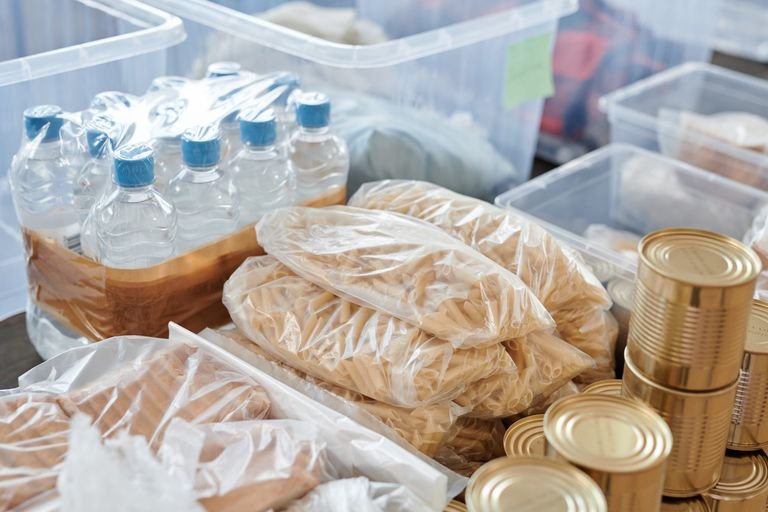
There’s no need to buy a huge pre-made emergency kit.
A few ordinary items can make a significant difference:
- A working torch
- Spare batteries
- A charged power bank
- A basic first-aid kit
- Drinking water
- Food that doesn’t need refrigeration
- A manual tin opener
- Essential medication
- Hygiene supplies
- Anything needed by babies or pets
- A small amount of cash
- Important numbers written on paper
Keep everything somewhere accessible.
An emergency box isn’t much use when it’s hidden behind Christmas decorations in a dark loft.
Food doesn’t need to consist of expensive freeze-dried meals either. My guide to 72-hour food preparedness explains how normal cupboard food can cover a short interruption.
It’s also worth checking that we’ve got appropriate first-aid supplies at home.
Check Priority Support
Energy and water suppliers operate Priority Services Registers for people who might need extra help during an outage.
This can include older people, those with disabilities or health conditions, households with young children and anyone who relies on electrically powered medical equipment.
Registration won’t prevent an outage, but it helps the supplier identify customers who may need additional communication or support.
Do We Need Three Days of Supplies?
Around 72 hours is a useful target, but it isn’t a magic number.
It simply gives us some breathing room during a power cut, water outage, severe weather event or another short disruption.
We don’t have to buy everything at once.
We can add a couple of suitable foods during the weekly shop, keep an extra bottle of water or buy a power bank we’ll also use while travelling.
Preparedness is easier—and cheaper—when the things we store have an everyday use.
What Preparedness Isn’t
We’re not being told to panic buy food, petrol or bottled water.
We’re not being told to build bunkers, buy military equipment or assume national collapse is imminent.
The National Risk Register is a planning tool, not a prediction.
The advice is closer to keeping a first-aid kit or testing a smoke alarm. We’re accepting that ordinary systems sometimes fail and making sure we’re not completely stuck when they do.
A Simple Starting Point
If you haven’t prepared anything yet, start with five actions:
- Find a working torch and keep it somewhere accessible.
- Charge a portable power bank.
- Store a reasonable amount of drinking water.
- Write down important telephone numbers.
- Discuss what your household would do if you couldn’t communicate or return home.
After that, build gradually.
Locate the stopcock. Check your flood risk. Review medication. Add a few foods that don’t need refrigeration and ask relatives whether they need help making their own plans.
None of this needs to be frightening or expensive.
A little disclosure: there are affiliate links on this website! That just means if you click on a link, find something you like and buy it, this site might receive financial benefit. Don’t worry, you won’t pay any extra – sometimes you might even get a discount. These links help to pay for the upkeep of the site.
Disclaimer: The content of this website is opinion and should never be considered as professional advice. Always consult a professional in the relevant areas.