A UK Winter Car Emergency Kit: What to Keep in Your Boot.
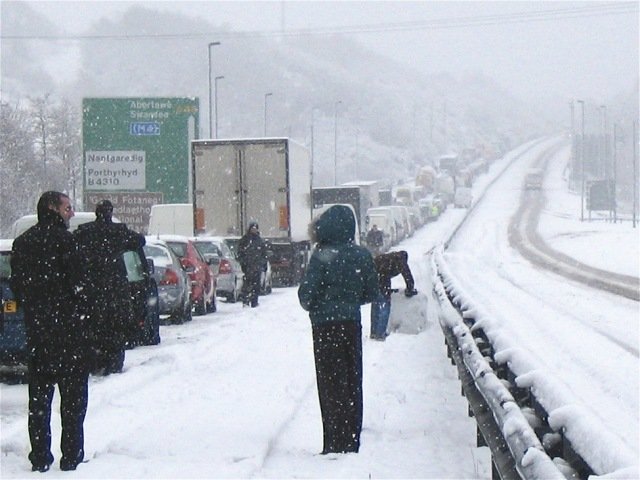
Most of us don’t expect to get stranded when we set off in the car, particularly on a journey we know well. But winter weather, flooding, a serious crash or a breakdown can quickly turn a short journey into a much longer wait.
That’s particularly true on some of our higher and more exposed roads across northern England and Scotland.
The A66 across the Pennines is a good example. In March 2018, heavy snow closed the A66 in both directions and left drivers stranded.
The M62 has seen even more dramatic examples. During the Beast from the East in 2018, around 200 cars were stuck overnight between Huddersfield and Rochdale, with some people stranded for as long as 19 hours. Local volunteers ended up taking food, hot drinks and blankets to people who had been stuck in their cars for hours.
Scotland sees the same kind of disruption too. Higher and more exposed roads can become extremely difficult in heavy snow, while crashes and jack-knifed lorries can bring major routes to a standstill.
These are extreme examples, but they make the point quite well. You don’t need your car to break down to find yourself stuck somewhere for several hours.
That’s why I think it makes sense to keep a small winter emergency kit in the boot.
I’m not talking about filling your car with survival equipment. The aim is simply to have enough with you to stay warm, safe, fed and able to communicate if an ordinary journey suddenly becomes anything but ordinary.
Start With a Basic Breakdown Kit
Some of the most useful items aren’t particularly winter-specific.
I’d start with a hi-vis vest, warning triangle, torch and a small basic tool kit.
It’s also worth checking what your car actually came with. A lot of newer cars no longer have a spare wheel and instead come with a puncture repair kit, sealant and compressor.
If that’s the case, make sure you know where it is, how to use it and whether the sealant has expired.
I’d also keep a tyre inflator in your car, along with the locking wheel nut key if your wheels require one.
Jump leads are useful, but a small rechargeable jump starter is even better because you don’t need another car to get yourself going.
A tow rope can also be useful in some situations, although it should only be used when it’s safe and appropriate.
Spare bulbs are worth carrying where they can actually be changed at the roadside. That’s becoming less relevant with modern LED lighting, but it still makes sense for cars using conventional bulbs.
Warning triangles are useful too, but there is an important motorway exception. The Highway Code says you should use one on ordinary roads where it is safe to do so, but never place one on a motorway.
First Aid and Fire Safety
A small first aid kit deserves a permanent place in your car.
It doesn’t need to be enormous. Something containing plasters, dressings, bandages, wipes, gloves and a few other basic supplies is enough for dealing with minor injuries.
I’d also consider carrying a small automotive fire extinguisher.
Hopefully it will never be used, but car fires do happen and a compact extinguisher takes up very little space.
Staying Warm
If you get stuck somewhere during winter, staying warm quickly becomes one of the most important considerations.
I’d keep a spare jumper or fleece in the car, along with a waterproof coat.
A hat and pair of gloves take up virtually no space either.
I’d also keep either a proper blanket or, preferably, a compact sleeping bag in the boot.
That might sound excessive until you imagine sitting in your car for three or four hours while a road is closed ahead of you.
A sleeping bag becomes particularly useful if you can’t keep the engine running continuously, either because your car has broken down or because you want to conserve fuel.
Food and Water
There’s no need to carry huge quantities of food or water.
A few bottles of water are enough for most realistic situations, particularly if the idea is simply to cover a long delay rather than prepare for an overnight stay.
For food, think simple and snackable.
Breakfast bars, cereal bars, chocolate, nuts, biscuits and dried fruit are all good examples because they can be eaten without cooking or preparation.
The main thing is to choose food you’ll actually eat.
It’s also worth checking everything from time to time and rotating anything that’s getting old rather than discovering you still have the same chocolate bar in your boot several winters later.
Keeping Your Phone Working
Your phone is probably one of the most useful pieces of emergency equipment you already carry.
It gives you navigation, weather warnings, traffic information, breakdown services and a way of contacting family or the emergency services.
That makes keeping it charged particularly important.
I’d keep a charged power bank in the car, but I’d also keep spare charging cables permanently in the glovebox or centre console.
It’s easy to have plenty of power available and then realise the cable you need is sitting at home.
A 12V cigarette-lighter USB adapter is also worth keeping in the car, preferably one with both USB-A and USB-C outputs.
If your car is still running, you can use the 12V socket to top up your phone and recharge your power bank.
Even if your car already has built-in USB ports, I’d still keep a dedicated cable in the car.
It’s also worth knowing whether your 12V socket stays live when the ignition is switched off. Some do, and leaving something connected for too long can drain your starter battery.
Use Navigation Even on Roads You Know
One of the easiest things you can do to avoid becoming stranded is to use Google Maps, Waze or Apple Maps even when you know the route well.
If I’m driving somewhere I’ve been hundreds of times before, it can be tempting not to bother with navigation.
The problem is that I might know the road, but I don’t necessarily know what’s happening ten or twenty miles ahead.
Live navigation can warn you about congestion, crashes and some road closures, and it may suggest an alternative route before you become committed to the problem.
That could be the difference between spending several hours sitting in stationary traffic and taking a slightly longer route you might not normally consider.
This becomes even more useful during bad winter weather, when snow, flooding or a crash can close a major route with little warning.
Navigation apps aren’t perfect though. If an alternative route tries to send you down an unsuitable minor road during heavy snow or flooding, use some judgement rather than blindly following it.
If You Regularly Drive in Snow
For most people, snow chains probably aren’t something they need to carry every day.
That changes if you live somewhere particularly remote or regularly travel on higher roads that are more exposed to snow.
In those circumstances, snow chains or another suitable traction aid may be worth considering.
A small folding shovel is another useful addition.
Again, this isn’t something everyone needs in the boot all winter, but it starts to make much more sense if you regularly travel across the Pennines, through rural northern England or on higher routes in Scotland.
What If You Have to Leave the Car?
Most winter emergencies are better dealt with by staying with your car where it is safe to do so, but there are situations where you might need to get out and walk a short distance.
That could be because your car has broken down somewhere remote, you need to reach a safe place, or you’ve ended up on a road where recovery is going to take some time.
If you regularly travel through rural, exposed or high elevation areas, I’d consider keeping a pair of walking boots or sturdy waterproof footwear in the boot.
They don’t need to be anything expensive or particularly specialist. The point is simply to avoid finding yourself trying to walk along a wet verge, through snow or across rough ground in office shoes or trainers.
This is especially useful if your normal journeys take you through upland areas, isolated roads or places where the nearest safe building might be some distance away.
Flooding and Road Closures
The same kit is useful when snow isn’t the problem.
Flooding can close roads quickly, while a serious collision can leave traffic stationary for hours.
The important point with flooding is that your winter car kit isn’t there to help you drive through flood water.
If the road ahead is flooded, turn around or follow an official diversion rather than trying to push through.
The kit is there for everything that follows: an unexpected diversion, a lengthy delay or several hours sitting in traffic while the road ahead remains closed.
Winter Car Emergency Kit Checklist
You don’t need to fill your boot with equipment. A fairly small kit can cover most realistic winter problems.
- Hi-vis vest
- Warning triangle
- Torch and spare batteries
- Basic tool kit
- Spare bulbs where appropriate
- Tyre inflator
- Spare wheel or puncture repair kit
- Locking wheel nut key
- Jump leads or rechargeable jump starter
- Tow rope
- First aid kit
- Small automotive fire extinguisher
- Spare jumper or fleece
- Waterproof coat
- Hat and gloves
- Blanket or sleeping bag
- A few bottles of water
- Breakfast bars, chocolate, nuts or other long-life snacks
- Charged power bank
- Spare phone charging cables
- 12V USB car adapter
- Walking boots or sturdy waterproof footwear
- Small folding shovel
- Snow chains or another traction aid if your journeys justify them
Most of this can be kept together in a simple boot organiser or plastic storage box. That also makes it much easier to check everything at the start of winter, rotate the food and water, charge the power bank and make sure nothing has gone missing.
The exact contents should also reflect who normally travels in your car.
If there are usually two or three people with you, carry enough water, warm clothing and food for everyone rather than building the kit around one person.
That becomes particularly important if you regularly travel with children or babies. A delay of several hours is much harder with a young child than it is for an adult, so consider adding the things you’d need to keep them comfortable for longer than expected.
Depending on their age, that might include nappies, wipes, spare clothes, baby food or formula, drinks and suitable snacks. It’s also worth having something simple to keep older children occupied, whether that’s a book, colouring supplies, a small game or something downloaded onto a tablet before you travel.
You don’t have to prepare for some extreme survival scenario for any of this to be useful.
You only have to imagine a journey that should take an hour unexpectedly taking four or five.
A relatively small kit in the boot, adjusted for the people who actually travel in your car, can make that wait considerably safer and much more comfortable.
A little disclosure: there are affiliate links on this website! That just means if you click on a link, find something you like and buy it, this site might receive financial benefit. Don’t worry, you won’t pay any extra – sometimes you might even get a discount. These links help to pay for the upkeep of the site.
Disclaimer: The content of this website is opinion and should never be considered as professional advice. Always consult a professional in the relevant areas.